
Ever wondered what actually happens to human cells when you scale up bioprocessing from a petri dish to a bioreactor? Most scientists see it as a matter of bigger equipment and higher volume. But that shift isn’t just technical—it's biological. The rules that govern cell behavior change, sometimes dramatically, reshaping everything we thought we knew about cell therapy development.
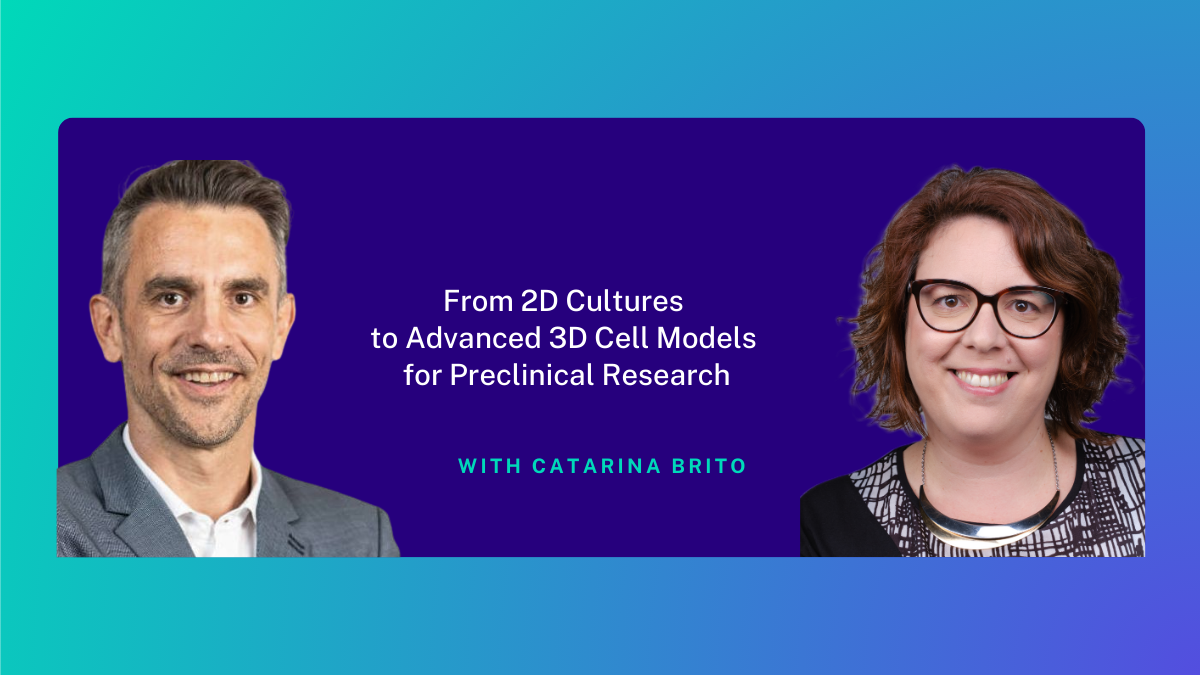
Smart Biotech ScientistPodcast host David Brühlmann is joined by Catarina Brito, Principal Investigator at ITQB NOVA and Head of the Advanced Cell Models Laboratory at iBET and ITQB NOVA , Portugal, to talk about how 3D cell models are driving a paradigm shift in preclinical research.
Key Topics Discussed
- Catarina Brito’s scientific journey from recognizing human–murine differences to pioneering human multicellular 3D biotechnology models.
- Traditional preclinical models (2D cultures and animal models), their advantages, and their fundamental biological limitations.
- The critical role of cellular context, multicellularity, and microenvironment in achieving human-relevant disease modeling.
- Regulatory momentum from FDA and European agencies to reduce animal testing through validated advanced in vitro systems.
- What defines advanced 3D cell models: tissue architecture, diffusion gradients, mechanical cues, ECM, and reproducibility.
- Construction and visualization of complex 3D tissues through coordinated interactions of multiple specialized cell types.
- Practical challenges of culturing 3D models, including cell diversity, stem cell use, bioreactors, perfusion, and parameter control.
- The transformative impact of advanced human models on drug development efficiency and future AI-enabled personalized medicine.
Episode Highlights
- Catarina Brito 's personal scientific journey: from discovering model limitations to pioneering 3D culture systems in neural and liver tissues [04:19]
- Limitations of traditional 2D cell cultures and animal models in capturing realistic tissue behavior and therapeutic responses [06:27]
- Regulatory movements toward reducing animal models, and the challenge of validating advanced alternatives for systemic biology studies [09:10]
- How advanced 3D models recreate cell-to-cell interactions, tissue-specific microenvironments, diffusion gradients, and multicellular complexity [10:35]
- Key differences in designing bioreactors for various cell types, with practical examples from liver and neural models [15:16]
- The impact of scalable, robust 3D models on accelerating drug development and improving selection of candidate therapies [17:22]
In Their Words
I really believe bioprocess development starts with understanding cell biology at scale. Cells are social entities, and they sense each other. They remodel their microenvironment, they rewire their signaling cascades when things such as cell density, mass transfer, and mechanical cues change. When we are moving from the T-flask to the bioreactor, I think we are not just increasing volume; we are changing the entire context in which the biology of the cells operates. That’s why I think we really need to respect biology as a primary design input.
Episode Transcript: From 2D Cultures to Advanced 3D Cell Models for Preclinical Research - Part 1
David Brühlmann [00:00:39]:
Imagine a world where we could predict how your body would respond to a therapy before it ever enters clinical trials. Today’s guest, Catarina Brito from ITQB NOVA and iBET in Portugal, is making that vision tangible. She’s pioneering 3D human cell models that recreate the complex microenvironment of human tissues—from brain and liver to tumors—revolutionizing how we test biologics and gene therapies.
If you’re tired of the limitations of Petri dishes and animal models, this conversation will reshape how you think about preclinical research.
Catarina, welcome to the Smart Biotech Scientist. It’s great to have you on.
Catarina Brito [00:02:35]:
Hi David. Thanks for having me here. I’m glad to be here.
David Brühlmann [00:02:39]:
It’s a pleasure. Catarina, share something you believe about bioprocess development that most people disagree with.
Catarina Brito [00:02:47]:
I think people are starting to believe it in the bioprocess industry—maybe not as strongly as I do, or not from the beginning. It’s a strong conviction of mine because I truly believe bioprocess development starts with understanding cell biology at scale.
Cells are social entities, and they sense each other. They remodel their microenvironment, they rewire their signaling cascades when things such as cell density, mass transfer, and mechanical cues change. When we move from the T-flask to the bioreactor, we are not just increasing volume—we are changing the entire context in which the biology of the cells occurs.
That’s why I believe we really need to respect biology as a primary (PR) input—media composition, oxygenation, and nutrient delivery—to keep biology within the right operating window so that we can successfully scale up. This means thinking about more than just equipment and volume, but really starting with biology as the foundation.
David Brühlmann [00:03:49]:
Scale-up is much more than “scaling up.” And you said it very well—there are so many different parameters you have to consider when scaling a process.
Before we dive deeper into today’s topic, let’s talk about you. Catarina, draw us into your story. What sparked your interest in biotechnology, and how did you arrive at the exciting field you’re working in today?
Catarina Brito [00:04:19]:
It all started during my PhD and was driven by the questions I was trying to answer. I was studying mechanisms driven by glycan–protein interactions, and these mechanisms are very different between murine and human cells. That was an early wake-up call—it made me really think about human biology and the accuracy of the models we were using, as well as the need for models that truly reflect human physiology.
The cellular processes I was studying involved neural cells and axonal outgrowth—processes that are highly dependent on context, particularly the extracellular matrix. Yet we were growing murine neurons on plastic surfaces, which are extremely artificial compared to what actually happens in the brain.
This reinforced the need for better models of the physical context and how it shapes signaling, morphology, and neuronal connectivity. And then there’s the cellular context—neurons are not isolated; many critical cues come from neighboring cells, particularly glial cells. The models we were using were monocultures, which was quite frustrating.
All of this led me to look for a postdoc where I could tackle these questions. My motivation truly crystallized when I had the opportunity to join iBET for my postdoc. I worked under the supervision of Dr. Paula Alves, who was already doing pioneering work on 3D culture systems and demonstrating that biology can—and should—be a primary design input for experimental models.
It was also a very exciting time: it was the first time human pluripotent stem cells were being used in Portugal. That experience was incredibly important and really set the direction for my career—building models that integrate human, multicellular complexity.
David Brühlmann [00:06:24]:
That’s fascinating. Let’s unpack this a bit, because not everyone listening today is familiar with animal models, 2D culture, or 3D culture systems—and there’s a lot happening in this space.
Let’s start with the traditional tools: 2D cell culture and animal models, which have dominated preclinical research for decades. What are the critical limitations of these systems, and what advantages do newer models offer?
Catarina Brito [00:06:53]:
Both. I should start by saying that, because we are often on the defensive. I’m always advocating for advanced models and 3D models, but all models have value, right?
2D cultures and animal models have taught us a lot about biological questions and pathological aspects as well. But of course, they also have limitations. And I think that understanding the limitations of each model is extremely important, especially when we’re trying to develop advanced therapies.
2D cultures are cells grown on a flat surface. Typically, they involve immortalized cell lines that are easy to culture. They offer a lot of control and high throughput, but they lack the structural and functional reality of tissues. Tissues are not flat. Some tissues are layered, but most tissues are three-dimensional.
Cell polarity is altered; diffusion of nutrients—and also of compounds with therapeutic potential—is different. There is no physical confinement of cells and no proper neighborhood effects. As a result, cell–cell interactions change significantly.
If we think about cells under these conditions, their receptor localization, metabolism, and overall phenotype change when moving from 2D to 3D, or from 2D to native tissue. So if we’re thinking about the development of biologics, for example, these molecules depend on receptor engagement, transport, and access to the microenvironment. There is therefore a major difference in both biology and therapeutic response.
When we think about animal models, they are still invaluable because they provide systemic biology—they represent a complete organism. However, they miss many human-specific aspects, particularly in the immune system, glycosylation patterns (as I mentioned before), genetic variability, and even disease etiology.
This can result in false positives and false negatives due to interspecies differences that can distort the readout. Of course, animal models remain useful and are part of a toolbox that should be as comprehensive as possible—but they do have limitations.
David Brühlmann [00:09:09]:
There’s been quite a push from regulatory agencies—especially the FDA—to reduce the use of animal models lately. What’s your take on this? Do you think we’ll ever reach a point where animal models are no longer used at all, or is that unrealistic? Will we always need a hybrid approach?
Catarina Brito [00:09:30]:
I think we are on a path that may eventually lead to the replacement of animal models, although a lot of validation is still required. There is a strong effort to develop multi-organ systems in which pharmacodynamics and pharmacokinetics can be studied. So far, what regulators have mainly pushed for is the replacement of animal models in types of readouts where we already know that the systemic component is not required. But I would say we are clearly on a path that could take us there—we just need strong validation.
There are also efforts from the European Commission, including dedicated calls and roadmaps, to move us in this direction. With support from regulators and agencies, we may eventually get there.
David Brühlmann [00:10:17]:
This will definitely be a paradigm shift for the industry—a very different way of developing drugs.
And speaking of different approaches, let’s zoom in on 3D models and advanced models. Tell us more about that. What exactly is a 3D model, and why is it called “advanced”?
Catarina Brito [00:10:35]:
The notion of “advanced” goes beyond simply growing cells in three dimensions. These models need to recreate key aspects of the tissue they are meant to represent. The tissue microenvironment shapes how cells behave, so the goal is to have a bioactive model in which cells influence the system and are influenced by it as well—ideally in a way that achieves reproducibility and robustness.
There are several important aspects. First, architecture—the three-dimensional structure is essential for cell polarity, spatial organization, and physical confinement. Then there is the presence of diffusion gradients. These are not only gradients of oxygen and nutrients, but also of signaling molecules, which are distributed in tissues and strongly influence biology. They also affect drug penetration, drug binding, and clearance.
Another important component is mechanical cues and the extracellular matrix. Cells sense stiffness and tension, which are crucial for survival, migration, and—for example—immune evasion, which is particularly relevant in cancer therapeutics.
Then there is multicellular complexity. Tissues are composed of different cell types that interact with each other. If we think about tumors, they interact with stromal cells and immune cells. In neural tissue, neurons interact with glia and microglia. These interactions are essential.
Advanced models aim to recapitulate biology more closely to what happens in the body, allowing us not only to study disease mechanisms but also to better predict therapeutic responses.
David Brühlmann [00:12:26]:
In those 3D systems, do people need to visualize this in a particular way? For example, if we take a liver cell type—do we reconstruct a mini liver organ in a bioreactor? Or is it more like having a large number of individual cells, maybe floating?
Catarina Brito [00:12:47]:
We try to recapitulate tissues by capturing this multicellular complexity—having the different cell types that compose the tissue interacting with each other.
It also depends on the tissue. In the liver, for example, hepatocytes are tightly connected through junctions. You also have endothelial cells with fenestrations—essentially “windows” that allow molecular exchange. Then there are macrophages, immune cells that move within the tissue space.
So the goal is not necessarily to reproduce the exact anatomical architecture, but rather to recreate the relevant cell–cell interactions and how they contribute to tissue function.
David Brühlmann [00:13:34]:
And how long can you keep these cells in culture? If you want to start a new experiment, do you have to start from scratch every time? Can you keep something like a cell bank—maybe that’s not the right term—but how does that work?
Catarina Brito [00:13:49]:
It depends a lot on the cell of origin. With primary cells, they are typically used for a limited time. They may last several weeks in the model, but they cannot be propagated extensively.
If we’re talking about pluripotent stem cells, then we can differentiate progenitors and at least bank those progenitor populations. This allows us to work in a multi-step way that facilitates reproducibility.
The duration of the model itself also depends on the culture system. We use a lot of bioreactor technology under perfusion, precisely to prolong the lifespan of these models.
David Brühlmann [00:14:37]:
And how do you handle diversity? You’re working with liver cells, neural cells, stem cells—many different cell types with different requirements in a bioreactor setting. How do you manage that? Do you change conditions, media, bioreactor size or shape?
Catarina Brito [00:15:16]:
It really depends on the tissue. Each tissue has its own requirements.
For example, neural cells are extremely sensitive to oxygen tension and mechanical stress. We use bioreactors, but the design has to minimize shear stress, and oxygen levels must be kept low and very stable. Tight control of process parameters is critical.
In the liver, oxygen requirements are completely different. There, maintaining functionality is key, and perfusion flow is essential to support metabolic competence. It’s also crucial to optimize the ratios of different cell types—not only hepatocytes, but also the so-called non-parenchymal cells. These ratios must be tightly controlled.
In solid tumors, heterogeneity is central. We need systems that allow extracellular matrix remodeling, which is a key feature of tumors. This enables the formation of tumor niches, including hypoxic niches, which are highly relevant. On top of that, we aim to incorporate immune cells and study immune cell infiltration.
All of these requirements are driven by biology. For each model, we carefully choose design variables to meet those needs. Across all systems, robustness and scalability are essential. We aim to design models that are as modular and bioreactor-compatible as possible, ensuring reproducibility and throughput.
Finally, we place strong emphasis on validation, to confirm physiological relevance and ensure that it is not lost during scaling throughput.
David Brühlmann [00:17:22]:
I’m just curious, and I may have missed this earlier, but the purpose of all this, as you said, is better reproducibility and, ultimately, faster development. So how do these advanced systems compare, for instance, to animal models? Why can development be accelerated so significantly?
Catarina Brito [00:17:42]:
The throughput is completely different. When you develop models in scalable systems, you achieve much higher throughput, and these models can be applied much earlier in the drug development process.
They can be introduced earlier in pharmaceutical development than animal models, which are usually brought in quite late. This allows for much more selection and decision-making earlier on.
Additionally, these models are increasingly being adopted because much of the relevant biology—particularly human biology—is not captured in animal models. Even in cancer research, many of the newer therapeutic modalities, such as cell engagers and multispecific antibodies, rely on biological mechanisms that are not reproduced in animal systems.
So even when animal models are available, there is still a strong need to bring human-based models to the forefront.
David Brühlmann [00:18:28]:
We’ve just scratched the surface of how advanced 3D models are transforming drug development. In part two, Catarina will dive into the critical role of innate immunity in predicting therapeutic responses and share her vision for AI-powered personalized medicine platforms.
If you’re finding value in these conversations, please leave a review on Apple Podcasts or your favorite podcast platform—it helps other biotech scientists discover these insights. See you in part two.
All right, smart scientists, that’s all for today on the Smart Biotech Scientist Podcast. Thank you for tuning in and joining us on your journey to bioprocess mastery. If you enjoyed this episode, please leave a review on Apple Podcasts or your preferred podcast platform. By doing so, we can empower more scientists like you.
For additional bioprocessing insights, visit us at www.bruehlmann-consulting.com. Stay tuned for more inspiring biotech conversations in our next episode. Until then, let’s continue to smarten up biotech.
Disclaimer: This transcript was generated with the assistance of artificial intelligence. While efforts have been made to ensure accuracy, it may contain errors, omissions, or misinterpretations. The text has been lightly edited and optimized for readability and flow. Please do not rely on it as a verbatim record.
Next Step
Book a free consultation to help you get started on any questions you may have about bioprocess development: https://bruehlmann-consulting.com/call
About Catarina Brito

About Catarina BritoCatarina Brito is a Principal Investigator at ITQB NOVA and Head of the Advanced Cell Models Laboratory at iBET and ITQB NOVA in Portugal. Her research focuses on the development of complex human cell models to investigate disease microenvironments and therapeutic responses, particularly in cancer immunology and neuroinflammation.

By integrating fundamental cell biology with translational research, her work aims to accelerate the development of advanced therapies while reducing reliance on animal models. She has coordinated more than 19 research projects, authored 90 peer-reviewed publications, and works closely with pharmaceutical partners and clinicians to advance innovation in preclinical research.Connect with Catarina Brito on [LinkedIn](https://www.linkedin.com/in/catarina-brito-ibet/).

Connect with Catarina Brito on LinkedIn.
David Brühlmann is a strategic advisor who helps C-level biotech leaders reduce development and manufacturing costs to make life-saving therapies accessible to more patients worldwide.
He is also a biotech technology innovation coach, technology transfer leader, and host of the Smart Biotech Scientist podcast—the go-to podcast for biotech scientists who want to master biopharma CMC development and biomanufacturing.
Hear It From The Horse’s Mouth
Want to listen to the full interview? Go to Smart Biotech Scientist Podcast.
Want to hear more? Do visit the podcast page and check out other episodes.
Do you wish to simplify your biologics drug development project? Contact Us

